Do water boatmen fly
 Emily Bell
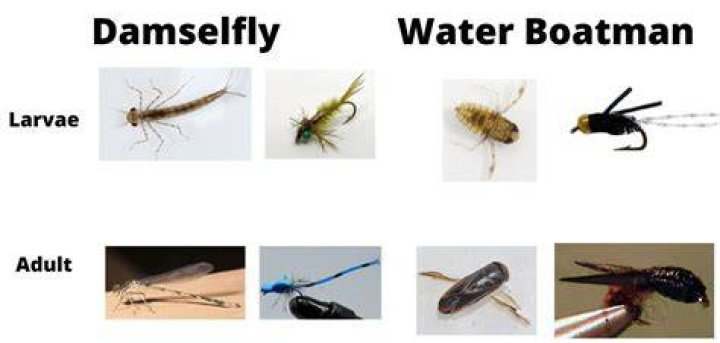
 Adult water boatmen have fully developed wings and are capable of flight.
Can Boatman bugs fly?
both water boatmen and backswimmers can fly. both can be found in mud at the bottom of streams, pools and ponds. both for pools, lay eggs in the algae.
How do water boatmen travel?
Like other aquatic bugs, Lesser water boatmen need to breathe at the water’ surface, but they have developed an ingenious trick to allow them to remain under water for longer: they hang upside-down, collecting air from the water’s surface and then carry it around as a bubble on their body.
Do Boatman beetles fly?
Boatmen and backswimmers are excellent fliers, which is part of the reason why they are of interest to trout and char. These insects undergo mating and swarming flights during the early spring and mid- to late fall.
Where do water boatmen bugs come from?
Water boatmen are common pests often found in pools and ponds. They sit at the bottom of slow streams or ponds to feed, breed and lay eggs. They’re freshwater true bugs known as Corixidae and often fly around at nighttime seeking out water sources for food.
What kills water boatmen?
Call your pool maintenance company for a chlorine treatment. Shocking your pool with chlorine sends these pests scrambling for cover. If you’ve got severe pool pests, you’ll likely need multiple chlorine shocks to kill all the water boatmen.
How long can water boatmen stay underwater?
The backswimmer stores air in two hair-covered troughs on the ventral side of its abdomen (it can stay underwater for as long as six hours), and the water boatman wraps a bubble of air under its wings and around its abdomen and also picks up dissolved oxygen from the water (it is so buoyant that it must grab vegetation …
Does a water boatman have wings?
They are both true bugs, having wings, which means they can fly between pools to find a new home if required, and both can swim and happily live in treated water – which is why they are a problem in the pool.
How do I get rid of water boatmen in my pool?
- Skim the pool. Since most of these bugs hang out around the surface, you should be able to skim most of them off with a net skimmer.
- Brush the pool. …
- Vacuum the pool. …
- Shock the pool. …
- Balance pool chemistry. …
- Vacuum the pool again. …
- Maintain proper chemistry levels. …
- Skim your pool daily.
What sort of creature is a water boatman?
water boatman, (family Corixidae), any of more than 300 species of insects in the true bug order, Heteroptera, that are named for their flat, boat-shaped bodies and long, fringed, oarlike hindlegs.
Article first time published on
What do pond skaters eat?
The Common pond skater can be seen ‘skating’ over the surface of ponds, lakes, ditches and slow-moving rivers. It is predatory, feeding on small insects by detecting vibrations in the water’s surface.
What does a boatman do?
A boatman is a man who is paid by people to take them across an area of water in a small boat, or a man who hires boats out to them for a short time.
Do water boatman eat tadpoles?
The lesser water boatman is vegetarian and eats algae and plant detritus. Its greater cousin however, is a carnivore. It preys upon other invertebrates, tadpoles and even small fish! They kill their victims by stabbing with their sharp mouthparts and injecting a poison.
What do water boatmen eat?
Water Boatman Lacking the standard piercing beak issued to other aquatic true bugs, they ingest living material—diatoms, algae, protozoa, nematodes, small insects—that they find when they stir up debris on the bottom of a body of water. Some suck juices from algae.
Can water bugs fly?
Water bugs fly from one body of water to another during mating season. While flying, they’re attracted to light and are often seen near parking lot lights and under porch lights—the reason for the “electric light bug” designation.
Why do flying ants get in my pool?
Flying ants, also known as alates, are sexually matured ants who leave their nests to mate and start a new colony. Your pool attracts them because these flying ants need water to quench their thirst. And the reflecting light from the pool’s water surface also attracts flying ants.
Do backswimmers eat water boatmen?
The backswimmer feeds off other insects in the pool, such as water boatman. The best way to remove these pests is to change their habitats and food sources. Both of these pests can fly and will lay their eggs on underwater vegetation.
What the difference between a backswimmers and a water boatmen?
To make life simpler, many biologists now call greater water boatmen ‘backswimmers’ because this is the most obvious difference between the two groups, and saves confusion. Lesser water boatmen swim on their fronts, and greater water boatmen – backswimmers – swim on their backs.
What do water boatmen eat UK?
The fearsome Common backswimmer hunts insects, tadpoles and fish. It uses its oar-like legs to swim upside-down under the water’s surface where unsuspecting prey can be found. Handle with care – it can inflict a painful bite!
Are Backswimmers poisonous?
The backswimmer isn’t truly poisonous, at least not to humans. … When he attacks a human, or a dog, there is a painful reaction combined with a burning sensation, comparable to that of a bee sting. Although the bite generally isn’t serious, a person who is sensitive to the toxin may have a more severe reaction.
How do Backswimmers get in my pool?
Water boatmen and backswimmers are different. They are attracted to the pool as a habitat and want to be in the water. How do they get in? Typically, one of two ways: either they fly in, or they are born there.
Why do I have boatmen in my pool?
If boatmen are showing up, you almost certainly have algae in your pool somewhere – even if you don’t see it. Boatmen are vegetarians, and the only reason they have to visit your pool is to eat the algae, which is a main food source in their diet. These bugs are beetle-like and might be mistaken for cockroaches.
How do I get rid of flies around my pool?
There’s nothing more irritating than having flies and other bugs swarm around you while you’re trying to take a dip in the pool. We’ve had some luck keeping bugs away by applying a large amount of white vinegar around the perimeter of the pool with a sponge.
How many wings does a water boatman have?
Corixa, wings The Lesser Water Boatman has two pair of wings: the front wings and the back wings. The front wings, which are somewhat sclerotised, serve as a cover and are sometimes called hemelytrae, in comparison with the tougher shielding front wings or elytrae that beetles have.
What is the largest insect called?
The tree weta is the world’s heaviest adult insect; the larvae of goliath beetles are even heavier. This endangered member of the cricket family is found only in New Zealand and can weigh as much as 2.5 ounces; that’s the size of a small blue jay.
Can a water boatman walk on water?
So, like a child on a bouncy castle, the water boatman is walking on a stretchable surface. The tension in the surface causes dimples to form under its feet.
Why is it called water boatman?
They tend to have four long rear legs and two short front ones. The forelegs are covered with hairs and shaped like oars, hence the name “water boatman”. Their four hindmost legs have scoop- or oar-shaped tarsi to aid swimming. They also have a triangular head with short, triangular mouthparts.
Can giant water beetles fly?
Adults often fly around, perhaps searching for other water bodies to colonize or for mates. They fly mainly at night and it’s thought that they use light sources (before humans this was the moon or stars) as beacons to orient their flight.
Do backswimmers eat tadpoles?
However there are two main differences: backswimmers are carnivorous eating tadpoles, insects and small fish, and they swim on their backs.
Are pond skaters carnivorous?
Pond skaters are carnivorous and eat other insects. They find prey by using ripple-sensitive hairs on their legs that detect vibrations in the water made by their prey.
How long do pond skaters live?
It reaches the adult phase in its life cycle after two months or so. Many species have a lifespan of only about a year, which gives them a single chance to reproduce before they die.