Can you etch zirconia
 Sarah Cherry
 “Zirconia is a ceramic, but it is not an etchable ceramic, nor does it contain silica,” Dr. Nuñez explains. “It cannot be etched or silinated.
What happens if you etch zirconia?
Strong-acid etching of zirconia induced significant surface changes that increased the shear bond strength of resin cement, and the resin adhesive strength was higher when zirconia was etched with strong acid vs. AB alone.
Can we etch zirconia?
Zirconia restorations do not have to be “etched” or the internal surfaces treated if your intention is to cement the restoration in place. … You can also try the restoration in first and then clean and prepare the zirconia for bonding. Zirconia is “etched” using air abrasion or sand blasting.
Is zirconia resistant to acid etching?
Dental zirconia can be etched by hydrofluoric acid.
Can you sandblast zirconia?
The general consensus among researchers and opinion leaders is that traditional high strength zirconia (3-4 mol% yttria concentration) can be safely and effectively sandblasted with 30-50 micron aluminous oxide (Al2O3) using a blast pressure of 1.5-2.8 bar (approximately 20-40 psi) from a distance of 1-2 cm and for a …
Which cement is best for zirconia crowns?
PANAVIA™ SA Cement Plus is an ideal everyday cement for zirconia crowns and bridges. It has a high concentration of MDP to provide high bond strength to zirconia and natural teeth without additional surface treatment.
Can composite bond to zirconia?
Ceramic surface treatment is required to enhance bonding composite resin to zirconia surface. Zirconia is resistant to traditional acid etching treatments due to its silica and glass-free polycrystalline structure. … Several ceramic primers were introduced to increase the chemical bonding strength of resins to zirconia.
Can you bond a zirconia crown?
In conclusion, it’s possible to bond zirconia as long as you (1) effectively decontaminate the tooth and the crown and (2) bond following the instructions of the cement manufacturer.
Which acid gel can etch the ceramics?
CEREC Ceramic Etch is a 5% hydrofluoric acid gel for etching ceramic restorations.
Can you over etch Emax?
If you over etch emax, you will notice a frosted appearance on the inside of the restoration. If this occurs, the rods that you are bonding to are weakened and you need to remove them.
Article first time published on
How do you cement BruxZir crowns?
Place zirconia primer, such as Z-Prime™ Plus (Bisco) or Monobond™ Plus (Ivoclar), on internal surface of BruxZir® restoration and dry for 3-5 seconds with an air syringe. 4. Mix and place RelyX™ Luting Plus, Fuji-CEM™ 2, or Nexus™ RMGI cement in crown, seat crown on tooth and proceed with cleanup.
How do you use Monobond plus?
Apply Monobond Plus to entire surface with a brush or applicator. Let it react for 60 seconds then air dry remaining liquid. Now you’re ready for your cement.
Can you light cure through zirconia?
When deciding to bond zirconia restorations, we can use a light cure to cure through Zirconia if it is thin. Light penetrates up to 1.5mm of zirconia.
Can zirconia be Luted with GIC?
Conventional luting agents, such as glass ionomer cement (GIC), could be used for cementation of zirconia ceramic full-coverage restorations5,9,14.
Can zirconia crowns be light cured?
Remove excess cement with a scaler while holding the crown in place. Light cure for 20 seconds per surface or wait 6 minutes from start of mix for dark cure. Finish and polish as needed.
How do you prepare zirconia for bonding?
Sandblasting or light particle abrasion can be effective ways to enhance bonding by creating a fresh zirconia surface to bond to (Dr. Nuñez recommends sandblasting with 50-micron aluminum oxide powder at 40 psi for 20 seconds).
Does zirconia need silane?
Unlike silica-based ceramics, high-strength ceramics such as zirconia cannot be sufficiently etched with common hydrofluoric-acid solutions. The typical silane coupling agent application is also useless, because there is no silica that would allow chemical adhesion of the silane.
Can you use resin cement with zirconia?
Zirconia-based ceramics have a high strength and, therefore, restorations can be cemented with traditional cements or bonded with resin cements.
What is RMGI?
Resin-modified glass ionomers (RMGI) were developed in an attempt to improve mechanical properties, decrease setting time, and attenuate moisture sensitivity. Simplistically, RMGIs are a hybrid of glass ionomers and composite resin, and thus contain acid-base and polymerizable components.
How do you clean a zirconia crown?
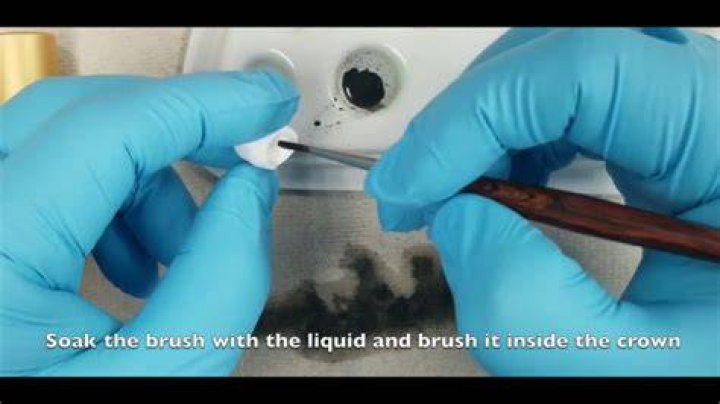
Use flour of pumice and water. If you are struggling to remove phosphate groups from zirconia, be sure to use a proprietary solution such as Ivoclean. Leave the solution on the crown for 20 seconds before rinsing. The crown should then be air-dried before it is ready to bond.
How do you etch porcelain?
Apply PORCELAIN ETCHANT (4% HF) to the dry porcelain surface for 5-6 minutes. Continue to observe the etch site throughout the entire procedure. Suction the PORCELAIN ETCHANT, then rinse with a copious amount of water and air dry.
How is phosphoric acid used in dentistry?
The phosphoric acid etching of the substrate previously to restorations or cementations allows for a better quality in the adhesion between the tooth and the restorative material. The phosphoric acid works in different ways when we compare its action on the enamel and on the dentin.
How do you use silane?
Apply 1 thin coat of BIS-SILANE to the etched porcelain surface and allow to dwell for 30 seconds. Dry with (warm) air syringe. 7. Apply a layer PORCELAIN BONDING RESIN or adhesive, air dry/air thin.
How do you prepare a tooth for a zirconia crown?
When preparing a tooth for posterior Zirconia crowns, on the other hand, you need to make sure that there is enough room for the wall thickness to have a minimum of 0.5mm and at least between 1mm and 1.5mm or 1.5 to 2mm occlusal reduction. The preparation should be tapered between an angle of 4 and 8 degrees.
How long do zirconia teeth last?
Like gold crowns, zirconia crowns can last up to and over 20 years. They rank among the strongest and most durable tooth crowns.
Can Monobond etch and prime be used on zirconia?
The most common approach to clean glass ceramic has been the use of 37-percent H3PO4. This should not be used on zirconia. … Monobond Etch & Prime cleans, etches, and primes the ceramic. Cleaning glass ceramic after silicone has been applied can only be achieved with HF acid.
How long does it take to etch Emax with hydrofluoric acid?
Ivoclar recommends preparing the glass with IPS ceramic Etching Gel, a 5% hydrofluoric acid, for a maximum of 20 seconds. Do not rely on the appearance of the internal surface as an indicator of adequate etching, as a frosty appearance actually indicates over-etching..
How long do you etch Emax for?
When in-office etching is needed, the following protocol should be used to ensure success. Lithium disilicate (e. max): 20 second etch with 5% HF. Leucite ceramic (Empress Esthetic, Authentic, etc.): 60 second etch with 5% HF.
What is BruxZir?
Bruxzir crowns are a type of ceramic crown that is made from zirconium oxide, also known as zirconia. This material is rapidly increasing in popularity and is not only used for crowns, but for bridges, inlays/onlays, implant-supported crowns and dentures, and veneers.
What are resin cements?
Resin cements are the luting agents of choice for bonding metal, ceramic and indirect composite restorations. … Resin cements are typically diacrylate resins containing 50-80% glass filler particles with most particles less than 1.0 µm in size.
What is self adhesive resin cement?
Self-adhesive resin cements are composed of diacrylate resins with acidic and adhesive groups and glass filler. They are usually dual-cured resins that can be light-activated and can self-cure. During setting, self-adhesive resin cements typically undergo a change in pH from acidic (pH 2) to less acidic (pH 5-6).