Why is Lothal famous
 Isabella Bartlett
 Lothal was a vital and thriving trade centre in ancient times, with its trade of beads, gems and valuable ornaments reaching the far corners of West Asia and Africa. The techniques and tools they pioneered for bead-making and in metallurgy have stood the test of time for over 4000 years.
What was found in Lothal?
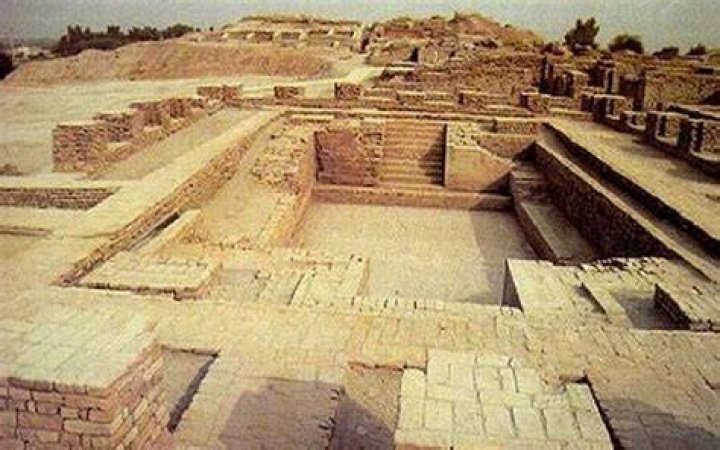
Lothal is a small mature Harappan settlement near Gulf of Khambat in Dhalka taluk of Ahmadabad in Gujrat. It was first excavated in 1957 by S R Rao. The notable structures at Lothal include a dockyard, warehouse, workshop for manufacturing of stone beads, evidence of shell working, rice husk and a cemetery.
Is Lothal famous for dockyard?
The dominant sight at Lothal is the massive dockyard which has helped make this place so important to international archaeology. Spanning an area 37 meters from east to west and nearly 22 meters from north to south, the dock is said by some to be the greatest work of maritime architecture before the birth of Christ.
Why is Lothal called mini Harappa?
The correct answer is Lothal. Lothal city is called mini – Harappa. Lothal was one of the southernmost cities of the ancient Indus Valley Civilization, located in the Bhal region of the modern state of Gujarāt. Lothal is a small mature Harappan settlement near the Gulf of Khambat in Dhalka taluk of Ahmadabad in Gujrat.
Where was the great granary discovered?
Great Granary was found at Mohen-jo Daro, while six small granaries were found at Harappa. The largest building discovered at Mohenjodaro is Great Granary.
Who was found Lothal?
Archaeologist S.R. Rao led teams who discovered a number of Harappan sites, including the port city of Lothal in 1954-63.
What is Shortughai famous for?
Shortugai (Shortughai), in Darqad District of northern Afghanistan, was a trading colony of the Indus Valley Civilization (or Harappan Civilization) established around 2000 BC on the Oxus river (Amu Darya) near the lapis lazuli mines. It is considered to be the northernmost settlement of the Indus Valley Civilization.
Which place is Lothal?
Lothal Worlds first known DRY DOCK About the location: About 80km southwest of Ahmedabad, the city that stood at this archaeological site 4500 years ago was one of the most important of the Indus Valley civilisation, which extended into what is now Pakistan.
What did people in Lothal use copper for?
“The Harappans are referred to as a Bronze Age culture,” writes Vasant Shinde, “and they used copper and bronze to manufacture axes, adzes, knives, fish hooks, chisels, pots and pans and jewelry in form of bangles, beads, or diadem strips.
Does Lothal get destroyed?
Lothal after the fall of the Empire With Pryce dead, the blockade fleet destroyed, and Thrawn and the Chimaera missing, the Imperial administration on Lothal collapsed.
Article first time published on
Why is Lothal called the Indus Valley Civilization?
Option D) Lothal: Situated in Gujarat, the site was excavated by S.R. … The word Lothal refers to the “mound of the dead”. It is situated between the Bhogavo and Sabarmati rivers near the Gulf of Khambhat, Gujarat. It is referred to as Manchester of Harappan Civilization because of its expansion of the cotton trade.
How can you say that Lothal was a prosperous port of ancient India?
The small town of Lothal was prosperous with its bead making industry and its sheltered harbour with a rich cotton and rice growing hinterland. It was a gateway to western Asia for the Harrapan civilisation and for overseas trade of semi-precious stone beads, copper, ivory, shell and cotton goods.
What ornament did the Harappans wear?
Ornaments were worn by everyone in Harappa including men and women. Their ornaments were made up of gold, silver, ivory, and precious stones. Ornaments of Harappans included necklaces, bangles, finger-rings, fan-shaped head dress, ear rings, anklets etc.
What are the most important findings of the Indus Valley civilization?
Important innovations of this civilization include standardized weights and measures, seal carving, and metallurgy with copper, bronze, lead, and tin. Little is understood about the Indus script, and as a result, little is known about the Indus River Valley Civilization’s institutions and systems of governance.
What does lothal Dockyard indicate?
Discovery of a rectangular dockyard at Lothal in Gujarat indicates that the people had maritime trade relations with other civilisations.
What is great bath of Indus Valley civilization?
The Great Bath is part of a large citadel complex that was found in the 1920s during excavations of Mohenjo-daro, one of the main centres of the Indus civilization. The bath is built of fine brickwork and measures 897 square feet (83 square metres). It is 8 feet (2.5 metres) lower than the surrounding pavement.
What is granaries of the world?
The Temperate Grasslands are often referred to as the ‘world’s granaries’ because wheat is grown and processed on a large scale with the aid of mechanized instruments and modern machinery in these regions.
What are the granaries of Harappa?
- Granaries were found at several sites such as Harappa, Lothal and Mohenjo-daro. …
- Two rows of six granaries were found at Harappa. …
- Near the granaries, two-roomed barracks have been found which might have housed labourers.
- The granary was built on a raised platform to protect it from floods.
Why is Harappan script called enigmatic?
The Harappan script is called enigmatic because of the following reasons: Most inscriptions were short, the longest contained about 26 signs, each sign stood for a vowel or consonant. Sometimes it contained wider space, sometimes shorter, had no consistency. Till today, the script remains undeciphered.
Is Afghanistan in the Indus Valley?
The Indus Valley Civilization existed through its early years of 3300-1300 BCE, and its mature period of 2600-1900 BCE. The area of this civilization extended along the Indus River from what today is northeast Afghanistan, into Pakistan and northwest India.
What is the meaning of the word Kalibangan?
Kalibangan name translates to “black bangles” (“Kālā”, in Hindi, means black and “bangan” means bangles). A few miles downstream is the railway station and township named Pilibangā, which means Yellow Bangles.
Was Lothal a sea port?
Archaeologists have also identified the remains of stone anchors, marine shells and seals, which can be traced to the Persian Gulf. These, along with a structure identified as a warehouse, strongly suggest that Lothal was a port with a dock.
Why was Lothal an important trading Centre?
Lothal was an important trading center because it appears Lothal served as a dockyard, where boats and ships, came in from sea and through the river channel. … It was an important trading center for making objects out of stone, shell and metal. Many seals and sealings were found in this storehouse.
Which was the twin capital of Indus Valley civilization?
Harappa and Mohenjo-daro are known as “the twin capitals” of the Indus Valley civilization.
Which metal was unknown to Indus Valley Civilization?
Iron was not know to Indus Valley Civilization people. The first evidence of Iron is found about 1000 B.C. from Ataranjikhera in Etah district.
Was trade important to the Indus Valley Civilization?
Rare and special foods, materials and other agricultural goods could be traded thus being the major and only booster in the Indus valley economy, meaning dependence on soil, technology and good produce was high. The Indus people were greatly reliant on trade.
What is early Harappan culture?
The terms Early Harappan and Harappan (from the site where remains of a major city of the Indus civilization were discovered in 1921) are used primarily in a chronological way but also loosely in a cultural sense, relating respectively to periods or cultures that preceded the appearance…
What is the medium of dancing girl?
Dancing Girl is a prehistoric bronze sculpture made in lost-wax casting about c. 2300–1750 BC in the Indus Valley Civilisation city of Mohenjo-daro (in modern-day Pakistan), which was one of the earliest cities.
Did the Mandalorian go to Lothal?
Lothal certainly ticks all the boxes as the secret location in The Mandalorian’s season 2 finale. Given how vital the planet is in Star Wars Rebels, however, The Mandalorian perhaps would’ve made a bigger deal out of Lothal’s live-action debut, rather than slipping the planet in quietly.
Why did the empire burn Lothal?
He grabs a speeder and heads in that direction, where he finds the charred remains of the settlement. Jarrus arrives moments later and says the citizens have likely been taken into Imperial custody. All Bridger can sense is evil, and his master tells him that the city was destroyed in order to spread fear on Lothal.
How long was maul on Lotho minor?
Maul lived in hiding for more than a decade in the caves beneath Lotho Minor’s surface, subsisting off trash and vermin, but his driving desire to cling to life pushed him to rebuild himself with spider-like legs made of the planet’s scrap metal, in place of his severed ones.