Is Whenever a adverb
 Andrew Mclaughlin
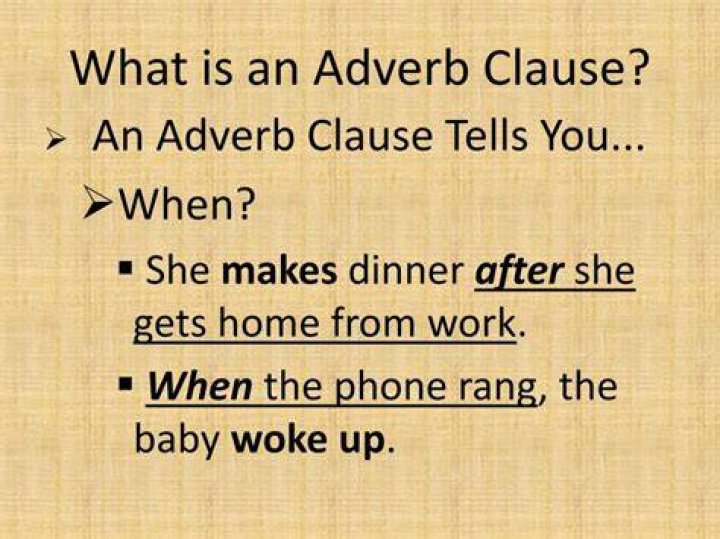
 Whenever can be used in the following ways: as a conjunction (connecting two clauses or phrases): Whenever I smiled, he smiled back. as an adverb: You can come whenever.
What type of adverb is whenever?
At whatever time. “Visit whenever you want to.” When.
Is Whenever a time conjunction?
The conjunction whenever means ‘every time that’ or ‘any time that‘. We often use whenever with the present simple: Our dog barks whenever someone walks by our house.
Is everytime an adverb of time?
What type of word is everytime? As detailed above, ‘everytime’ is an adverb.
What do you mean by every time?
Definition of every time : each time : whenever Every time I go there I learn something new.
Is it whatever time or whichever time?
Both words are correct there, but ‘whichever‘ has more of a definite group in mind, whereas ‘whatever’ is more open..
What is the meaning of whenever?
: at any or every time that. whenever. adverb. English Language Learners Definition of whenever (Entry 2 of 2) : at any time : at whatever time.
Is it each time or every time?
Everytime should be written as two separate words: every time. While some compound words like everywhere, everyday, and everyone have become commonplace in the English language, everytime is not considered an acceptable compound word. Consider the examples below: You don’t need to remind me to do the dishes everytime .
What is example of adverb of time?
Examples of Adverb of time are- today, yesterday, tomorrow, last year, next year, gone month, coming month, now, then, annually, daily, often, everyday, all day, never, ever, occasionally, fortnightly etc.
Is Sunday an adverb of time?
What does Sundays mean? The word Sundays can be used as an adverb meaning every Sunday or on Sundays, as in I work Sundays or The office is closed Saturdays and Sundays. … When it’s used as an adverb, Sundays describes when something happens or when an action is taken.
Article first time published on
How do you use the word whenever?
- He snorted whenever he mentioned him. …
- Just remember, I’ll always be there – whenever you need me. …
- I will bring you back here whenever you want. …
- Sure, whenever you’re ready. …
- He’d just appear whenever he felt like it.
Is any time one word?
A century ago, it was standard to write any time as two words in all contexts. But it’s now perfectly acceptable to write anytime as one word when you’re using it as an adverb. … Anytime is an adverb that means “whenever” or “at any time.” You can use it like you would any other adverb: Call me anytime.
Is it every day or everyday?
Everyday, one word, is an adjective meaning “used or seen daily,” or “ordinary.” “The phone calls were an everyday occurrence.” Every day, two words, is an adverb phrase meaning “daily” or “every weekday.” “They go to the coffee shop every day.” One trick to remember which is which is to see if you can put another word …
Is every time a conjunction?
The most common subordinating conjunctions in the English language include after, although, as, as far as, as if, as long as, as soon as, as though, because, before, even if, even though, every time, if, in order that, since, so, so that, than, though, unless, until, when, whenever, where, whereas, wherever, and while.
What is another word for whenever?
each timeevery timewhensoeveron every occasionat any timeeach and every timeon any occasionwhenifwherever
What is the difference between whatever and however?
formmeaninghowever’any way at all’ or ‘it doesn’t matter how’whatever’anything at all’ or ‘it doesn’t matter what’whichever’any one at all’ or ‘it doesn’t matter which’whenever’any time at all’ or ‘it doesn’t matter when’
What is the difference between whatever and whichever?
The baseline difference between the words “whichever” and “whatever” is that “whichever” refers to a specific item or thing and “whatever” does not. When we use “whichever,” we speak about something very specific, but if you use“whatever,” you can mean anything at all.
Which which or whichever?
“Which” and “Whichever” do not mean the same thing. “Whichever you pick” actually means something more like “any one that you pick“. Examples: When you rescue a cat or a dog from the animal shelter, don’t be too worried about picking one.
Is yesterday an adverb of time?
Adverbs of time tell you when something happened. They express a point in time. These adverbs of time are often used: to talk about the past: yesterday, the day before, ago, last week/month/year.
Is Late an adverb of time?
Grammar. Late or lately? Late is both an adverb and an adjective; it means the opposite of early. … Late as an adverb means ‘not on time’: …
Is morning an adverb of time?
Adverb that can be used in two positionsStronger positionWeaker positionoftenOften, I jog in the morning.I often jog in the morning.
What is another word for each time?
wheneverevery timewhensoeveron every occasionat any timeeach and every timeon any occasionwhenifwherever
What's the difference between anytime and everytime?
“Every time” is suitable in contexts where you want to emphasize that something is universally true, whenever it occurs: Every time my brother calls me at work, he wants to stay on the phone forever. “Anytime” (one word in this context) is about representative examples of something, as in your two sentences.
Is everything one word or two?
Everything (one word) is the default spelling. It is defined as all things; all things of a group or class; all things of importance; the most important fact or consideration.
Is before adverb of time?
Before is a preposition, an adverb and a conjunction. Before means earlier than the time or event mentioned: Can you call me back before 5 pm, please?
Is early adverb of time or manner?
alreadylatelystillearlynowsoonfinallyrecentlytoday
Is Monday an adverb of time?
The word Mondays can be used as an adverb meaning every Monday or on Mondays, as in I work Mondays or Many restaurants are closed Mondays. … When it’s used as an adverb, Mondays describes when something happens or when an action is taken.
Is Whenever past tense?
Yes, you can use “whenever” in the past tense or the present.
When I can or whenever I can?
when I can’ implies, to me, that the speaker is only committing to helping once. ‘ . . . whenever I can’ implies that the speaker is prepared to help more than once.
Is it anyday or any day?
There is no word in the English language as “anyday”. It is always two words. There are many compound words beginning with “any”, such as anyone, anywhere, anyway and anything, but not any and day.
Does anytime or any time?
“Any time” is always correct. “Anytime” is always an adverb. “Anytime” cannot follow a preposition such as “at.” Use “any time” when referring to an amount of time.