Can ALS start in toes
 Sarah Cherry
 ALS often starts in the hands, feet or limbs, and then spreads to other parts of your body. As the disease advances and nerve cells are destroyed, your muscles get weaker. This eventually affects chewing, swallowing, speaking and breathing.
Does ALS start in the feet?
ALS often starts in the hands, feet or limbs, and then spreads to other parts of your body. As the disease advances and nerve cells are destroyed, your muscles get weaker. This eventually affects chewing, swallowing, speaking and breathing.
Does ALS cause numbness in toes?
Although some CIDP symptoms may appear similar to those of ALS, ALS does not cause numbness, tingling, or uncomfortable sensations. Also, ALS commonly causes symptoms such as muscle twitching, weight loss, and muscle wasting as well as problems speaking, breathing, and swallowing.
What does ALS do to your feet?
People with ALS also experience foot drop and a “slapping” gait. Foot drop is a general term to describe difficulty lifting the front part of the foot.
Does ALS cause toe twitching?
Central nervous system conditions. Some more serious central nervous system conditions can cause muscle twitching throughout your body, including your toes. ALS happens when motor neurons that transmit signals from nerves to your muscles become weak and die off.
Why does foot drop occur in a person with ALS?
The ankle dorsiflexion weakness may cause foot drop, which is a common clinical manifestation and may be a prominent feature of lower limb-onset ALS patients during the early stages. The most frequent cause of foot drop is peroneal neuropathy at the fibular head.
Does ALS cause foot pain?
Does ALS cause pain? The answer is yes, although in most cases it does so indirectly. From what we know at this time, the disease process in ALS only affects the nerve cells controlling strength (motor neurons) in the brain, spinal cord, and peripheral nerves.
What does ALS feel like at first?
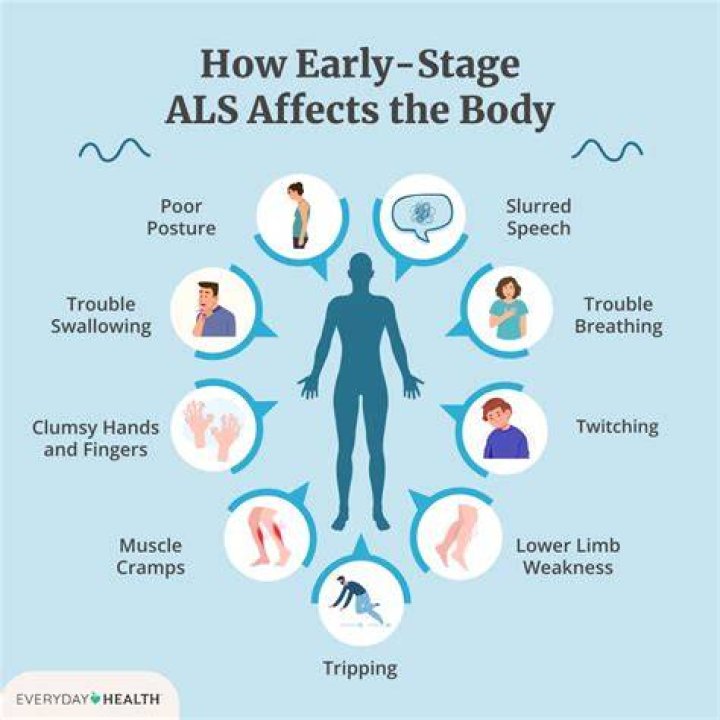
Initial Symptoms of ALS Bulbar onset usually affects voice and swallowing first. The majority of ALS patients have limb onset. For these individuals, early symptoms may include dropping things, tripping, fatigue of the arms and legs, slurred speech and muscle cramps and twitches.
What were your first ALS symptoms?
- Muscle twitches in the arm, leg, shoulder, or tongue.
- Muscle cramps.
- Tight and stiff muscles (spasticity)
- Muscle weakness affecting an arm, a leg, the neck, or diaphragm.
- Slurred and nasal speech.
- Difficulty chewing or swallowing.
Do ALS symptoms come on suddenly?
As I have mentioned before, ALS does not start abruptly. Consider Lou Gehrig. At first he never dreamed he had a disease. That’s the same problem all of our patients face.
Article first time published on
How do you rule out ALS?
Electromyography: EMG is one of the most important tests used to diagnose ALS. Small electric shocks are sent through your nerves. Your doctor measures how fast they conduct electricity and whether they’re damaged. A second part of the test also checks the electrical activity of your muscles.
Can ALS cause pins and needles?
ALS doesn’t cause numbness, tingling, or loss of feeling. Respiratory problems and problems with swallowing and getting enough food are the most common serious complication of ALS. As the muscles in the throat and chest weaken, swallowing, coughing, and breathing problems tend to get worse.
What comes first in ALS muscle weakness or twitching?
What are the symptoms? The onset of ALS may be so subtle that the symptoms are overlooked. The earliest symptoms may include fasciculations (muscle twitches), cramps, tight and stiff muscles (spasticity), muscle weakness affecting a hand, arm, leg, or foot, slurred and nasal speech, or difficulty chewing or swallowing.
What is dystonia of the feet?
Curled, clenched toes or a painful cramped foot are telltale signs of dystonia. Dystonia is a sustained or repetitive muscle twisting, spasm or cramp that can occur at different times of day and in different stages of Parkinson’s disease (PD).
Where do ALS twitches occur?
To diagnosis ALS, a physician needs to see signs of progressive muscle weakness. What causes fasciculations? They originate at the very tips of the nerves, called axons, as they come close to being in contact with the muscle.
Does twitching come and go with ALS?
While both conditions create muscle fasciculations, fasciculations appear to be more widespread in BFS. The twitching also affects the muscle while it is resting. However, it will stop when the person starts using the muscle. In ALS, twitching can start in one place.
What does ALS feel like in the legs?
What are the symptoms? The first sign of ALS is often weakness in one leg, one hand, the face, or the tongue. The weakness slowly spreads to both arms and both legs. This happens because as the motor neurons slowly die, they stop sending signals to the muscles.
How do I know if I have drop foot?
What are the symptoms of foot drop? People who have foot drop may drag their toes when they walk. They may also have to lift their knees higher than usual to avoid dragging their toes. Other symptoms include muscle weakness and “tingling” feelings in the leg.
How long before foot drop is permanent?
Your foot drop condition may improve on its own within 6 weeks. It may take longer for a serious injury to heal. You may need any of the following: Ankle brace: You may be given an ankle brace to help retrain your leg to lift your foot.
Do early ALS symptoms come and go?
Most people with ALS live 5 years or less after their diagnosis, but some live much longer. Research is underway to find treatments to extend and improve the quality of life. With MS, the course of the disease is harder to predict. Your symptoms may come and go, and may even disappear for months or years at a time.
Can you have ALS for years and not know it?
However, as symptoms begin to develop into more obvious muscle weaknesses and/or atrophy, physicians are more likely to suspect ALS in their patients. It is extremely difficult to diagnose ALS. In fact, it’s often diagnosed months or even years after symptoms begin, by ruling out other diseases.
What diseases can mimic ALS?
- Myasthenia gravis.
- Lambert-Eaton myasthenic syndrome.
- Lyme disease.
- Poliomyelitis and post-poliomyelitis.
- Heavy metal intoxication.
- Kennedy syndrome.
- Adult-onset Tay-Sachs disease.
- Hereditary spastic paraplegia.
Will ALS show up on EMG?
Patients with ALS tend to show abnormal EMG results, especially if there are significant signs of lower motor neuron (LMN, in the spinal cord) involvement. The test can identify the onset of LMN involvement before symptoms are obvious.
What does ALS leg weakness feel like?
Early symptoms of ALS are usually characterized by muscle weakness, tightness (spasticity), cramping, or twitching (fasciculations). This stage is also associated with muscle loss or atrophy.
Is tingling common in ALS?
Sensory Symptoms Some people with ALS report tingling sensations. However, this is not common and it usually goes away. Tingling or sensory discomfort in ALS is caused by pressure and prolonged immobility rather than by the disease itself.
Can ALS start in both legs?
Disease onset often occurs in one of two distinct ways: Limb Onset ALS or Bulbar Onset ALS. While disease onset is usually focal (symptoms start in one specific site – either limb or bulbar), multifocal (symptoms start in multiple sites) onset is possible and can occur in both limbs and bulbar regions simultaneously.
Why is the top of my foot twitching?
Cramps or spasms in the muscles often have no clear cause. Possible causes of hand or foot spasms include: Abnormal levels of electrolytes, or minerals, in the body. Brain disorders, such as Parkinson disease, multiple sclerosis, dystonia, and Huntington disease.
What causes dystonia in toes?
Aetiologies of adult onset foot dystonia include Parkinsonism, stroke, trauma, a structural lesion and psychogenic dystonia. Other less common causes are Wilson’s disease, exposure to certain medications and spinal stenosis.
Why do my toes curl up?
Toes can curl gradually over time due to faulty mechanics, pressure from poorly-fitting shoes, diabetes, or injury. That’s when you’ve got a toe deformity that may need a doctor’s care.
What causes feet and toes to draw?
Improper footwear or hard surfaces. Wearing poorly fitted shoes or shoes without enough support throughout the day may tax foot muscles as well. Not only that, but standing or working on concrete floors or other hard surfaces can have a similar effect. The foot muscles work extra hard to support the weight of your body …